JANUARY 2006
The Power of Nightmares was broadcast over three nights from Tuesday 18 to Thursday, 20 January, 2005 at
2320 GMT on BBC Two.
THE CENTURY OF THE SELF
| Adam Curtis'
acclaimed series examines the rise of the
all-consuming self against the backdrop of the
Freud dynasty. To many in both politics and business, the triumph of the self is the ultimate expression of democracy, where power has finally moved to the people. Certainly the people may feel they are in charge, but are they really? The Century of the Self tells the untold and sometimes controversial story of the growth of the mass-consumer society in Britain and the United States. How was the all-consuming self created, by whom, and in whose interests? The Freud dynasty is at the heart of this compelling social history. Sigmund Freud, founder of psychoanalysis; Edward Bernays, who invented public relations; Anna Freud, Sigmund's devoted daughter; and present-day PR guru and Sigmund's great grandson, Matthew Freud. Sigmund
Freud's work into the bubbling and murky world of
the subconscious changed the world. By
introducing a technique to probe the unconscious
mind, Freud provided useful tools for
understanding the secret desires of the masses.
Unwittingly, his work served as the precursor to
a world full of political spin doctors, marketing
moguls, and society's belief that the pursuit of
satisfaction and happiness is man's ultimate
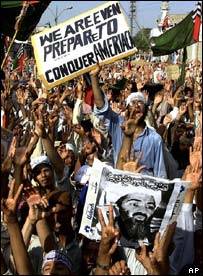
goal. In the past our politicians offered us dreams of a better world. Now they promise to protect us from nightmares. The most frightening of these is the threat of an international terror network. But just as the dreams were not true, neither are these nightmares. In a new series, the Power of Nightmares explores how the idea that we are threatened by a hidden and organised terrorist network is an illusion. It is a myth that has spread unquestioned through politics, the security services and the international media. At the heart of the story are two groups: the American neo-conservatives and the radical Islamists. Both were idealists who were born out of the failure of the liberal dream to build a better world. These two groups have changed the world but not in the way either intended. Together they created today's nightmare vision of an organised terror network. A fantasy that politicians then found restored their power and authority in a disillusioned age. Those with the darkest fears became the most powerful. The rise of the politics of fear begins in 1949 with two men whose radical ideas would inspire the attack of 9/11 and influence the neo-conservative movement that dominates Washington. Both these men believed that modern liberal freedoms were eroding the bonds that held society together. The two movements they inspired set out, in their different ways, to rescue their societies from this decay. But in an age of growing disillusion with politics, the neo-conservatives turned to fear in order to pursue their vision. They would create a hidden network of evil run by the Soviet Union that only they could see. The Islamists were faced by the refusal of the masses to follow their dream and began to turn to terror to force the people to "see the truth"'. The Power of Nightmares continues its assessment of whether the threat from a hidden and organised terrorist network is an illusion. Part two, the Phantom Victory looks at how two groups, radical Islamists and neo-conservatives with seemingly opposing ideologies came together to defeat a common enemy.
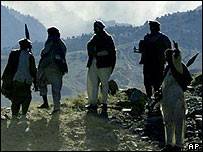
On 25 December 1979, Soviet forces invaded Afghanistan. Moscow was able to install a friendly government in a neighbouring country but at a price. The invasion gave a common cause to an extraordinary alliance of radical Islamists in Afghanistan and around the world and to the neo-conservatives in the US. It was a key battleground of the Cold War. Washington provided money and arms including even Stinger missiles capable of shooting down Soviet helicopters. But it was Islamic Mujahideen fighters who would fire them. Among the many foreigners drawn to Afghanistan was a young, wealthy Saudi called Osama Bin Laden. Long before 9/11, he would have been seen by neo-conservatives in Washington as one of their foot soldiers, helping fight America's cause. After nearly 10 years of fighting, Soviet troops pulled out of Afghanistan. Both the neo-conservatives and the Islamists believed that it is they who defeated the "evil empire" and now had the power to transform the world. But both failed in their revolutions. In response, the neo-conservatives invented a new fantasy enemy, Bill Clinton, focusing on the scandal surrounding him and Monica Lewinsky. Meanwhile, the Islamists descend into a desperate cycle of violence and terror to try to persuade the people to follow them. Out of all this comes the seeds of the strange world of fantasy, deception, violence and fear in which we now live. In the concluding part of the series, the programme explains how the illusion was created and who benefits from it. In the wake of the shock and
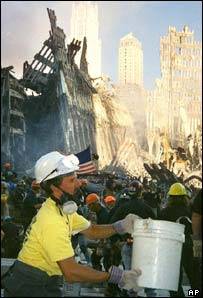
panic created by the devastating attack on the
World Trade Center on 11 September, 2001, the
neo-conservatives reconstructed the radical
Islamists in the image of their last evil enemy,
the Soviet Union - a sinister web of terror run
from the centre by Osama Bin Laden in his lair in
Afghanistan. There are dangerous and fanatical individuals and groups around the world who have been inspired by extreme Islamist ideas, and who will use the techniques of mass terror - the attacks on America and Madrid make this only too clear. But the nightmare vision of a uniquely powerful hidden organisation waiting to strike our societies is an illusion. Wherever one looks for this al-Qaeda organisation, from the mountains of Afghanistan to the "sleeper cells" in America, the British and Americans are chasing a phantom enemy. But the reason that no-one questions the illusion is because this nightmare enemy gives so many groups new power and influence in a cynical age - and not just politicians. Those with the darkest imaginations have now become the most powerful. In part one, the programme looked at the origins of the neo-conservatives and the radical Islamists in the 1950s. The second part of the series examined how the radical Islamists and neo-conservatives came together to defeat the Soviet Union in Afghanistan.
This year, the Bafta award-winning film The Power Of Nightmares, by British documentary-maker Adam Curtis, is one of the political heavyweights in the Official Selection. The powerful film looking at how fears over an organised Al-Qaeda terror network have come to dominate US and UK politics was shown on the BBC last year. But organisers approached Curtis and asked him to make the three-part documentary into a single film to be shown Out of Competition at the festival. Curtis is on the Riviera to watch the film premiere under the glare of the world's media at the Palais on Saturday night. Editing challenge He told the BBC News website he was surprised to be asked by the festival selectors to take part, as he considers himself to be a journalist and not a film-maker. "If you were rung up out of the blue by the guy who runs the Cannes Film Festival and he asks 'can you turn it into a film, we want to show it in the Official Selection', you say 'yes' - then you ask questions." Curtis admits that condensing the three one-hour episodes into one movie was a challenge. And he said he found the idea of including a documentary such as his in the festival an interesting one. "I'm really interested in why this lot - the cineastes and arty lot - are interested in politics and factual stuff, and I think it is because they have run out of ideas for fiction. People like me are interesting because we are describing the world in a new sort of way." Curtis used Gus Van Sant's Last Days - which is in competition for the Palme d'Or - as an example of what he believes is lacking in current films. The film is loosely based on the final days of Nirvana frontman Kurt Cobain, who committed suicide in 1994. Beautiful evocation "I thought it was a good film, but I thought it is typical of a lot of films of our time - they don't really know what to say about the world," Curtis explained. "They can describe it beautifully, and Last Days was exactly that. It was a beautiful, beautiful evocation of the horror of an event, but it didn't explain it to you, and it almost didn't explain to you deliberately. It was sort of like, 'I'm going to just show what it was like to be there', and that is what Last Days was like." Curtis said Van Sant's direction was typical of the current emotional climate about the importance of the individual running through the veins of society. "Film-makers have other responses to the world other than their own emotions. We are living in a time when emotions rule everything. In a sense Mr Van Sant is being completely honest and true, which is probably what a good artist does, but actually the only way you can be true at the moment in terms of being an individual is to say 'well I feel this', and that is his feeling about Columbine or about Kurt Cobain. I think the really difficult thing to do in our time is analyse why people like Mr Van Sant only have that response."
Curtis said The Power of Nightmares attempted to explain the modern world and put it in context with the individual. He said: "I think the cineastes and film-makers are getting quite interested [in The Power of Nightmares] because a lot of their fiction has run into a dead end. The film I have just made is about the relationship between individuals and society. Film doesn't seem to want to 'do society' any longer, its sort of given up on this, it is just about 'I feel this', which seems to be a condition of our time. I haven't seen a movie that deals with society for 20 years." Fanatical individuals The Power of Nightmares explains how Curtis believes the vision of an Islamic terror network has been distorted by politicians intent on creating a climate of fear. The film makes it clear there are fanatical individuals willing to conduct acts of terror, but shows there is no formal terrorist Al-Qaeda organisation. Talks are underway at Cannes with distributors who are keen to show the film in the US. Curtis said he hoped any screening of the film would open up a "critical debate" in the US about the existence of Al-Qaeda and the wider terrorist threat touted by politicians. "I will be questioned a
lot, but maybe this is rather optimistic, I think
there is a sense in the backs of people's minds
that things don't quite add up. I will have to
make it absolutely clear that I am not saying
there is no terrorist threat, but it isn't as
simple as you are being told. The threat has been
over-simplified in the wake of September 11. I
hope that would receive a decent critical
response, rather than an emotional
response." The Power of Nightmares - first screened in Autumn 2004 - explored how the idea that we are threatened by a hidden and organised terrorist network is largely an illusion. Many viewers asked the series creator, Adam Curtis to detail any books covering the ideas in the series and filling in the background. For Islamism the best books are:
By far the best book on Afghanistan is The Fragmentation of Afghanistan by Barnett Rubin and his follow up called The Search for Peace in Afghanistan. And Zawahiri's own account of the struggle which is actually very revealing - It is translated as Knight's under the Prophet's Banner. (I think you can still find it on the internet). For the history of Neoconservatism try:
And for the weirdness of the 1990s:
Adam Curtis wrote, produced and narrated the series, Power of Nightmares first broadcast on BBC Two in Autumn 2004 and repeated in January 2005. His other work for the BBC
includes The Century of the Self, The Mayfair
Set, Pandora's Box, The Living Dead and An Ocean
Apart The Power of Nightmares is to be turned into a feature film to be screened at the Cannes film festival. It was first screened on BBC Two in Autumn 2004 as a series of three one hour documentaries questioning whether the threat of terrorism to the West is a politically driven fantasy and if al-Qaeda really is an organised network. For latest information: The BBC was inundated with correspondence, some critical much of it very positive. Viewers were invited to put their questions to the creator of the series, Adam Curtis. Here he responds to some of those correspondents, chosen to represent a broad selection of your questions. I have sat through your
documentary tonight. I hope your programme is
shown again following the next terrorist attack.
You sound like the hedgehog who claims that cars
won't hurt you!I'm amazed! Iain Foster,
Portsmouth In the face of much more tangible threats in the past - like the IRA, the Soviet Union and even Nazi Germany - British governments did not encourage the people to behave like hedgehogs. Why roll up into a ball now in the face of what is a serious but in no way an overwhelming threat to our nation and our freedoms? The programmes did not say that there was no threat. What they argued was that although there is a serious threat of terrorism from some radical Islamists, the nightmare vision of a uniquely powerful hidden organisation waiting to strike our societies is an illusion. The question the series tried to answer was why contemporary politicians and other elites, like the media, want you to feel frightened - to behave and feel like a hedgehog trapped on a motorway - when the reality and the scale of the threat is actually very different. Do you believe that there
have been any real threats to Western countries
that have been 'pre-empted' by the authorities,
or have all the arrests fallen down on a lack of
evidence? Is the pre-emptive strategy a
successful one, and is it not best to be safe
rather than sorry? On the surface the policy of pre-emption - detaining people ahead of time before they can do their attacks - is logical and sensible. The problem with it though is that it does undermine one of the fundamental principles of our legal system and democracy, the ability to prove your innocence. If we lock up people on the basis of "future crimes", in other words things that haven't even happened, then you have a huge responsibility to get it right in what you imagine might happen. At the moment, as the programmes showed, in both Britain and America we are detaining people on the basis of a series of assumptions about international terror networks that when one examines the evidence largely do not exist. In other words we are locking people up on the basis of an magnified and distorted vision of what might happen - a process driven by the politicians' dark imaginations rather than reality. Those who have been detained then find it impossible to disprove this because there is, by definition, no substantive proof in a policy of pre-emption. In the recent Law Lords judgement on the British detainees, Lord Hoffman argued that this may be eroding the very basis of the democracy we are supposed to be defending. Would you acknowledge that
the mujahideen in Afghanistan became radicalised
by Zawahiri after the US became involved, rather
than because of the US involvement and that many
radical Islamic groups around the world have
members that were in Peshawar at the time of the
Afghan war and would have had contact with Bin
Laden & Zawahiri? Here I am thinking of Jamal
Islamija, Khattab from Shamil Basaev's group and
members of Ansar al Islam in particular. Many of the mujahideen became radicalised through their experience in Afghanistan. The major influence in this, as the second film in the series showed, was not Ayman Zawahiri but Abdullah Azzam. He inspired many with the idea that the Afghan experience could transform them as individuals and that they could return to their own countries and lead revolutions that would create Islamist societies throughout the Arab world. Initially the idea was that this could be achieved politically, but with the failure of Islamist political parties in the 1990s many mujahideen became further radicalised and turned to violence. But it is important to realise that the overwhelming majority of the Islamists in the camps in Afghanistan in the 1990s were training to go and fight in their own countries - Chechnya, Uzbekistan, Kashmir - not to attack America. If one looks at the film of the camps at the time one sees fighters being trained in the tactics of urban guerrilla warfare not the terrorism feared by the West. The idea of attacking the West directly came from Zawahiri and a small group of Islamists who were frustrated by the failure of Islamism to achieve its goal. Many of the Islamists in Afghanistan were against this strategy, including the Taliban leadership. The point is that Islamism is a complex political and revolutionary movement with many different strands and theories. Zawahiri's strategy and argument are just one extreme part of that movement. The common idea that all the mujahideen flooded out of Afghanistan with the sole intention of attacking and destroying the West is just wrong. Zawahiri's ideas are out there and as the films showed they have inspired groups and individuals around the world - and they are dangerous. But to search for a hidden organised network is to miss and misunderstand the real nature of the threat that we face from some radical Islamists. How can we not take the
nightmare scenario seriously with the increasing
threat of available WMD? How will this programme
be remembered when that happens? The world is full of threats. But you cannot let your judgement be distorted or overwhelmed by the politics of fear. Cf: Iraq. Why did you omit the
economic element - oil, trade, globalisation,
privatisation etc. The crucial project of
imperialism. I think this is a serious and important criticism. To put it at its simplest it says that the neocons are being used. That their ideas and their myth of America as a revolutionary force that can spread democracy and freedom around the world are a convenient disguise for a much more ruthless and anti-democratic exploitation of the world. My problem with it as an argument is that it is itself based on a simplistic ideology that doesn't fully explain what is happening. Underlying the argument is what some people call a "vulgar Marxism", the belief that business and corporate interests shape the world and that all ideas and political ideology are just froth on the surface that disguise the real, hidden forces underneath. The neoconservatives and the Islamists believe the complete opposite - that ideas can fundamentally change the world. In the neoconservatives' own words: "Ideas do have consequences." I don't believe either of these positions. I think the reality is far more complex - that ideas do have widespread effects but not in the way those who developed them necessarily intended. They are taken up, used and distorted by many other forces which include business and corporate interests. But the essential point is that it is not business that leads the way. And in this area in particular I do think that the ideas had a primacy. The reality is that both the neoconservatives and the Islamists became powerful and influential because of the power of their ideas and I wanted to make a series of films that explained the roots of these ideas and how they were taken up, simplified and distorted. This was the focus of the programmes, and I made them this way because very few people know anything about the history of these ideas and I thought it was important to tell that history from the point of view of those involved and to critically analyse the development of their ideas. I think it may well be true that there is a synergy, a fit, between the neoconservatives' particular individualistic version of democracy and the neo-liberal economic policies that suit American business interests but I really don't think that is what is driving the neo-conservatives. As I said in the films I see them as the last political idealists - they are driven by an extraordinary and epic vision of transforming the world which reflects America's own revolutionary history as much as it does its capitalist economics. Is it possible that the
ideology of radical (political) Islam has a
better chance of succeeding where it failed in
the 1980s now that the West has responded as it
has to the perception of its threat in
Afghanistan, Iraq etc? I can only repeat what I said in my previous responses on this site. I think one has to be very careful about this. The films showed that Islamism is not a new phenomenon. Its trajectory in the 1980s and 90s is that of rise and fall. It tried to create a pan-Arab revolution and failed because it couldn't inspire the masses. The answer is that no-one knows whether the war on terror is re-creating mass Islamism and giving it a new revolutionary appeal, or whether it is actually fuelling a more nationalist opposition that uses an Islamist rhetoric - as seems to be happening in Iraq. The problem is that it is so dangerous to report anything in Iraq, that everyone - both pro and anti - project what they want to see onto the insurgency. Yet again our perception of reality is being driven by political fantasies rather than an accurate understanding drawn from reality. Hearing so much that we are
being misled by the government, how could I
determine that programmes like yours isn't
misleading as well? Of course the government has
their reasons to mislead the public, but I think
there are also reasons for people like yourself
and Michael Moore to release information such as
the ones shown in your documentary. Other than
the goal to show "the truth." I don't
think I am alone being paranoid with all this
information contradicting with each other. Welcome to the modern world. I agree with you, I think that "the truth" has become a much more contentious issue since the end of the Cold War. Back then the world was much simpler and more certain, and patrician elites on both sides of the Iron Curtain were confident in putting forward the received wisdom on all important issues. Today we all have to work much harder to weigh up the different versions of the truth that are being presented to us. This is exactly what I tried to do in the series. I looked at both historical and contemporary factual evidence and judged the politicians' and the media's versions of what we were threatened by against this evidence. In doing this I found a severe mismatch between the rhetoric and the evidence. I then put forward an argument which tried to explain why this has happened - that in this new and uncertain world politicians have found in fear a way of restoring their patrician authority. My aim in doing this was to say to people: "Look, have you thought of it this way?" as a means of encouraging them to question the received wisdom they are told by governments and the media. You don't have to agree with my argument about why this has happened, but what I do hope is that the basic journalism and evidence in the programmes will make people see how weak and partial the official version is. In a bewildering and confusing time I think that is proper public service broadcasting. Has there been any response
(official or unofficial) from the government to
the arguments put forward by your series? As
someone who still just about manages to trust
Tony Blair I would be particularly curious to
know if he has seen any of the programmes. None - either official or unofficial. But the Archbishop of Canterbury liked it and the President of Venezuela has asked for a tape. Surely, the danger is from
the primitive belief in a god of whatever kind.
Don't you agree that all sane people must reject
religion whether Islamic, Christian, Judaist or
whatever, as only such fanatical beliefs claim
there is an absolute truth? Stalin managed perfectly well without religion. To be blunt I think that religion has very little to do with this. In the case of Islamism I think religious ideas were taken up and used by thinkers like Sayyid Qutb for political purposes to drive what is essentially a nationalist movement that flourished in the wake of the failure of the secular politics of Nasser. I would suggest you read a fascinating article in this month's edition of Prospect magazine by Michael Hirsh. He argues that it was the marginalisation of Islam in Arab societies by Kemal Ataturk and Nasser that left Muslim societies unprotected against dictatorships. His view is that Islam will come to play a crucial role in the growth of future democracies in the Middle East. You succeeded in avoiding
any mention of Israel which may have been
sensible but perhaps somewhat economic with the
truth? My focus was the history of Islamism as a political movement. Its aim is a revolutionary one, to create a new type of society in countries throughout the Middle East. If the Palestinian question was solved tomorrow, that would not alter the Islamist's aims or strategy at all. Bin Laden, Zawahiri and all Islamists, moderate and extreme, speak out against Israel's occupation of the Palestinian homeland. They do this because they see it as part of the American domination of the Middle East and they may see this as a part of their strategy. But it is not their primary focus. This is why I did not concentrate on it. Since the programme's first
screening and the recent repeats, have you
noticed any significant impact the programme has
had among politicians and/or the public? I don't think that television programmes really change things. Television is a reinforcing medium - it tends to express and amplify already existing changes that are in motion. In the case of the Power of Nightmares I think the series gave a sharp and focussed expression to a widespread and growing disquiet about the way governments and the media had been reporting the threat. If there is a terrorist attack in the coming months - which there may be - then I think there will be a counter-reaction from within both the political and media elites. They will seek to say loudly that this proves there is a hidden and terrifying network unlike anything we have faced before. But I think that there is now a strong enough body of opinion that will challenge this and say that it shows nothing of the kind. We have faced urban terrorism before and dealt with it calmly and bravely and I would hope that our politicians will help us do so again without hysterical overreaction. But I really don't think that this state of fear will last. The Law Lords ruling is very very important and it shows members of the establishment are really beginning to ask questions. I would point you towards Lord Hoffman's speech and in particular to paragraphs 94 - 97. Like Lord Hoffman I am optimistic, I'm sure we will survive not only "al Qaeda" but also the politics of fear. Of course when the fear goes and people see just how much it was exaggerated then there will be a further loss of trust in politicians and their authority. But that in itself may provide an opportunity for a new and more progressive form of politics to emerge. Is there a track list
available for all music used. I like the music
(recognise some of it) but would like to find out
what the other tracks are called. There is too much music and
noise to list everything. But the main pieces
used are these: Charles Ives - Symphony number two - 5th movement. Putnam's Camp from Three Places in New England. Plus a bit from Central Park in the Dark Ennio Morricone - Theme from the 1970 film Investigation of a Citizen Above Suspicion And a Morricone piece from the 1980 Pontecorvo film Ogro Shostakovich - Lyric waltz from the Ballet Suite No 1 and a bit from The Young Lady and the Hooligan John Barry - The Ipcress File Soundtrack to The Voyage to the Bottom of the Sea - Paul Sawtell and Jerry Goldsmith Colours by Donovan Baby It's Cold Outside - the 1949 version by Johnny Mercer and Margaret Whiting The best noises come from Skinned - which is a whole lot of samples from the archives of the band Skinny Puppy Please can you attach to the
website some suggestions for further reading For Islamism the best books are: Jihad - The Trail of Political Islam by Gilles Kepel and his earlier book, The Prophet and the Pharaoh The best insight into the ideas behind all this are in the writings of Sayyid Qutb - in particular Milestones (also translated as Signposts Along the Road) Olivier Roy - The Failure of Political Islam and Globalized Islam. Jason Burke - Al Qaeda By far the best book on Afghanistan is The Fragmentation of Afghanistan by Barnett Rubin and his follow up called The Search for Peace in Afghanistan. And Zawahiri's own account of the struggle which is actually very revealing - It is translated as Knight's under the Prophet's Banner (I think you can still find it on the internet) For the history of Neoconservatism try: The Rise of the Counterestablishment by Sidney Blumenthal Neoconservatism by Irving Kristol Leo Strauss and the American Right - Shadia Drury Antiliberalism by Stephen Holmes Recasting Conservatism by Robert devigne Neoconservatism by Irving Kristol The Closing of the American Mind by Allan Bloom And for the weirdness of the 1990s: Blinded by the Right - David Brock The Gang of Five - The Leaders at the Centre of the Conservative Ascendancy - Nina Easton Adam Curtis wrote, produced and narrated the series, Power of Nightmares first broadcast on BBC Two in Autumn 2004 and repeated in January 2005. His other work for the BBC includes The Century of the Self, The Mayfair Set, Pandora's Box, The Living Dead and An Ocean Apart. I
No. The use of fear in contemporary politics is not the result of a conspiracy, the politicians have stumbled on it. In a populist, consumerist age where they found their authority and legitimacy declining dramatically they have simply discovered in the "war on terror" a way of restoring their authority by promising to protect us from something that only they can see. I don't think it will last. Already senior parts of the Establishment are beginning to question the very basis of the politicians' argument - that "al-Qaeda" is a threat like no other which "threatens the life of the nation". In the recent House of Lords ruling which said that the indefinite detention of foreign nationals without trial was illegal, one of the Law Lords - Lord Hoffman - publicly challenged the government's justification. He said: "This is a nation which has been tested in adversity, which has survived physical destruction and catastrophic loss of life. I do not underestimate the ability of fanatical groups of terrorists to kill and destroy, but they do not threaten the life of the nation. Whether we would survive Hitler hung in the balance, but there is no doubt that we shall survive al-Qaeda. The Spanish people have not said that what happened in Madrid, hideous crime as it was, threatened the life of their nation. Their legendary pride would not allow it. Terrorist violence, serious as it is, does not threaten our institutions of government or our existence as a civil community." Adam Curtis wrote, produced and narrated the series, Power of Nightmares first broadcast on BBC Two in Autumn 2004 and repeated in January 2005. His other work for the BBC includes The Century of the Self, The Mayfair Set, Pandora's Box, The Living Dead and An Ocean Apart.
|
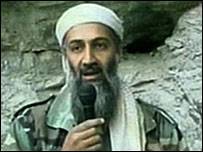
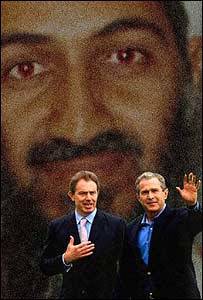 Michael Moore's Fahrenheit 9/11
thrust documentary film into the spotlight at the
Cannes Film Festival in 2004 when it won the
Palme d'Or for best film. The Power of
Nightmares began as a three-part documentary
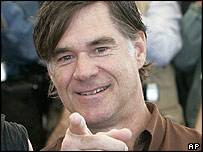 Curtis believes Gus Van
Sant relies on personal emotions for his movies